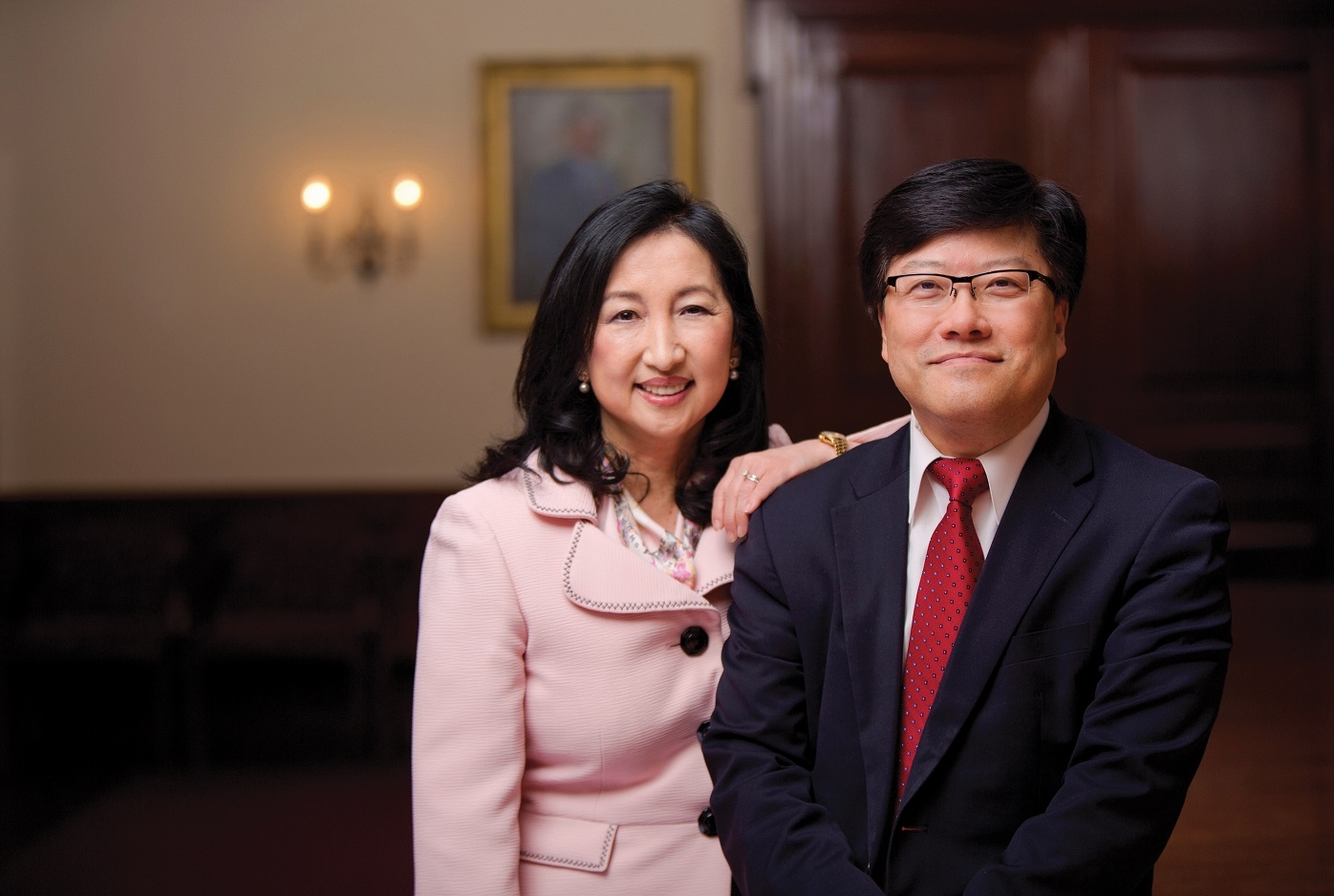
Internationally renowned neuro-oncologist Dr. Howard A. Fine of Weill Cornell Medicine and NewYork-Presbyterian will receive a five-year, $6 million National Institutes of Health Director’s Pioneer Award for brain cancer research.
The new Roosevelt Island campus of Cornell Tech has catalyzed a slew of innovative academic programs that will benefit not only Cornell Tech students but also students from the Ithaca campus. And those programs will deepen the symbiotic academic partnership that links Cornell’s New York state campuses, administrators say.
Though medicine has made important strides in treating cardiac patients in recent years, there’s still no cure for cardiovascular disease — a broad group of disorders that claim nearly 18 million lives around the globe annually, a number that the World Health Organization predicts will grow to almost 23.6 million by 2030.
The complex life cycle of the parasite that causes malaria has made it a difficult foe to beat. But new insights on how the parasite is transmitted from humans to the mosquitoes that spread malaria may lead to new ways to control this deadly disease.
Actress Angelina Jolie’s 2013 announcement detailing her decision to undergo a mastectomy to reduce her risk of developing breast cancer likely inspired more women in English-speaking countries to do the same.
Geriatrician Dr. Karin Ouchida loves hearing people’s stories. She listens to her patients and is often amazed by their resilience—just as she felt learning the stories of her family, Japanese Americans sent to internment camps during WWII.
On a Tuesday in early June, just days before summer break, dozens of third-year medical students gathered in the Belfer Research Building to present findings from independent research projects they’d been working on since February.
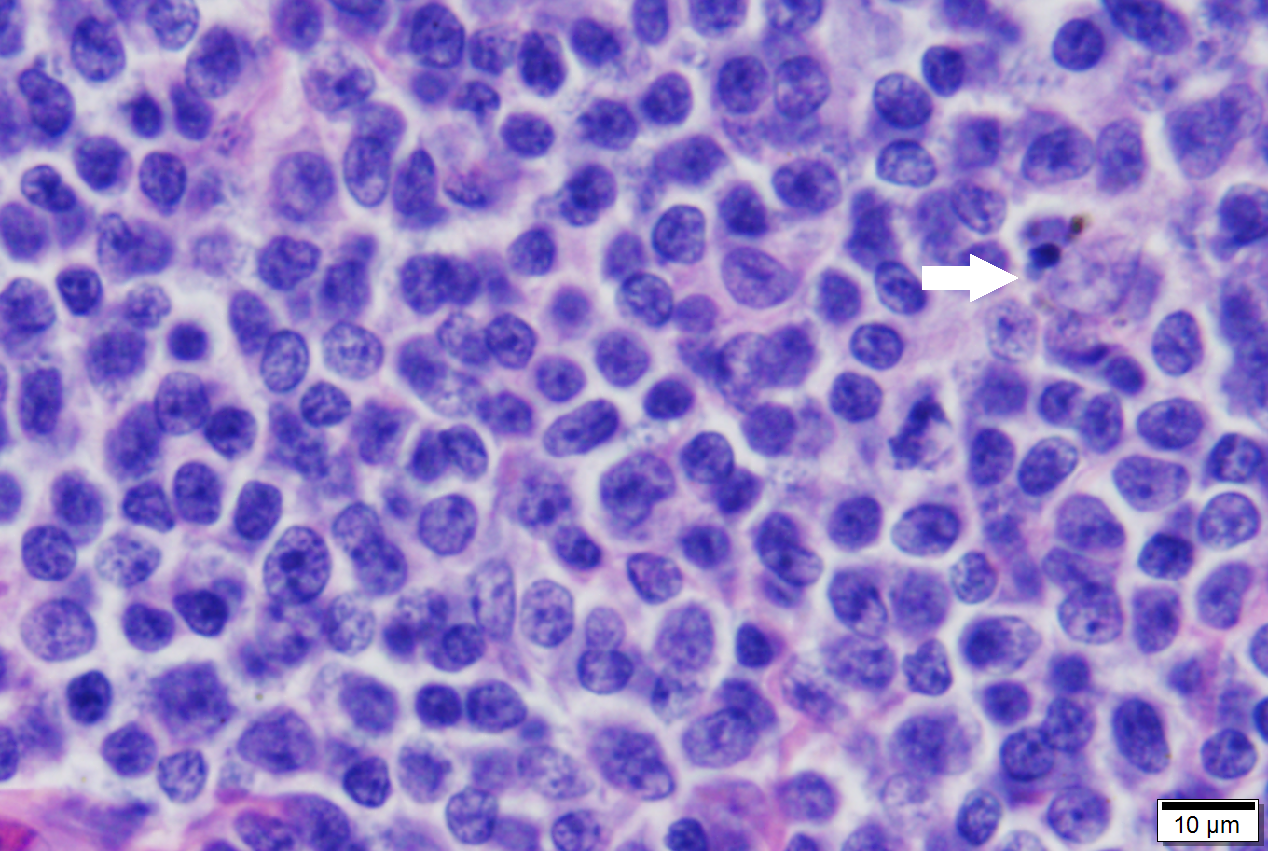
Errors in the regulation of gene expression may contribute to the development of a common form of blood cancer and point to potential treatment strategies, according to a new study by scientists from Weill Cornell Medicine and Memorial Sloan Kettering Cancer Center.
Martha Pollack, PhD, Cornell’s 14th president, took office in April; she came from the University of Michigan, where she’d served for 17 years in several roles including dean of the School of Information and provost, a position that included overseeing the university’s medical school.
Cornell’s tradition of scholarship, research and service in New York City exemplifies the university’s land-grant mission and transcends disciplines and geographic regions, said Cornell President Martha E. Pollack during a Sept. 14 reception in honor of her inauguration as the university’s 14th president.
Dr. Olivier Elemento, a renowned computational biologist and leader in the field of computational genomics and biomedicine, has been named director of the Caryl and Israel Englander Institute for Precision Medicine at Weill Cornell Medicine.
Nano-sized sensors developed by Weill Cornell Medicine and Memorial Sloan Kettering Cancer Center researchers can measure lipids, or fat molecules, in special compartments within live cells.
A new study finds that it isn’t just the amount of time spent sitting, but also the way in which sitting time is accumulated during the day, that can affect risk of early death.
Dr. Carl Crawford’s passion for medicine has deeply personal roots. Watching his father — an Olympic boxer from Guyana who seemed invincible — battle colon cancer inspired Dr. Crawford to treat his patients with the same thoughtful care he would have given his dad.
Weill Cornell Medicine has been awarded a five-year, $11.3 million Specialized Programs of Research Excellence grant from the National Cancer Institute to improve the detection, diagnosis and treatment of prostate cancer.
Dr. Olaf Andersen was honored in July with the Bert I. Shapiro Award from the National Association of MD-PhD Programs for his work as director of the Tri-Institutional MD-PhD Program.
Martha E. Pollack plumbed the depths of Cornell history and spoke to current times in her inaugural address Aug. 25, following her installation as the university’s 14th president.
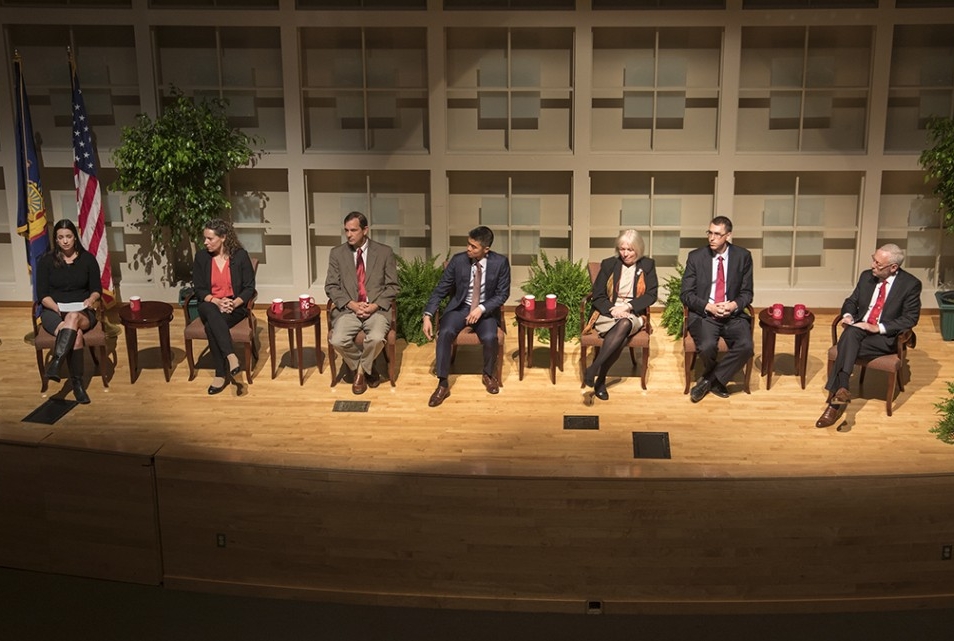
Cornell faculty members from a range of disciplines – law, linguistics, information science, medicine, molecular biology and genetics, and English – spoke on the role of truth in their fields and in society during a symposium that was part of the celebration of Martha E. Pollack’s inauguration as Cornell’s 14th president.