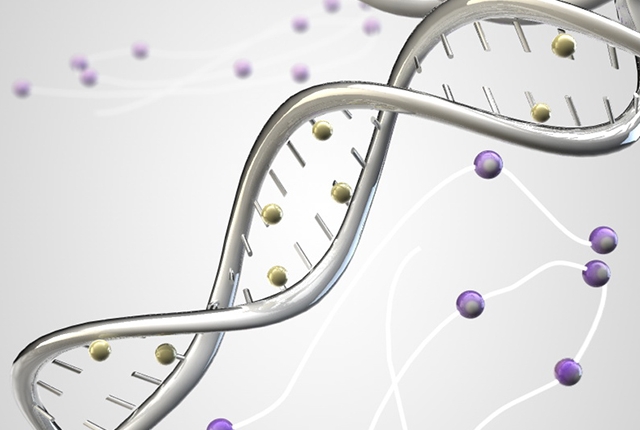
The addition of a chemical tag on an RNA molecule is the critical switch that inactivates one X chromosome in every cell, ensuring healthy development in all female mammals.
A National Cancer Institute grant establishes a multi-institutional translational research unit to investigate the mechanics of how breast cancer develops, spreads and responds to therapy.
The grant will enable researchers to hone technology for a quick, in-the-field diagnosis of Kaposi's sarcoma -- a cancer frequently related to HIV infections.
A powerful next-generation genome-sequencing test developed at Weill Cornell Medicine can detect mutations that guide precision cancer treatment with over 95 percent accuracy.
A synchronized event brings together more than 400 people from 54 cities around the world to collect samples of DNA, RNA and microbes from surfaces in subways, buses, airports and other well-traveled public meeting spaces.
A drug that recruits immune cells to fight an aggressive form of lymphoma that disproportionately affects minorities in the United States appears to be more effective than chemotherapy.
The steroid dexamethasone could potentially deter the growth of a prostate cancer subtype that was previously thought to be difficult to treat with medications.
Grand Challenges Explorations Grant will enable scientists to develop maps of 54 international cities that show their genetic differences and also their epigenetic states.
New study finds unique connections in the adolescent brain may help to diminish fear memories and avoid anxiety later in life -- which could be important for the treatment of trauma and anxiety disorders
Despite their nearness to death, a sizeable proportion of advanced cancer patients remain unaware of basic information about their illness or its treatment.