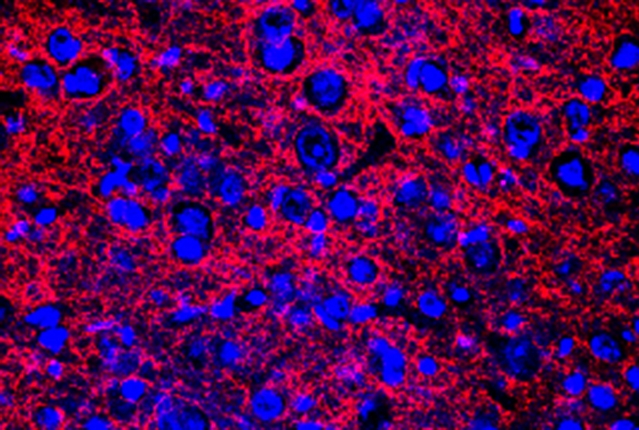
Metabotropic glutamate receptors, which are important but difficult drug targets, interact in surprisingly varied ways with their principal regulatory proteins, according to two new studies led by Weill Cornell Medicine investigators.
Weill Cornell Medicine investigators have “reverse engineered” ketamine’s antidepressant effects to identify potential new strategies for treating depression.
Weill Cornell Medicine investigators have identified in a preclinical model a specific brain circuit whose inhibition appears to reduce anxiety without side effects.
A new technology developed by Weill Cornell Medicine and Max Planck Institute for Medical Research scientists allows the controlled, on-and-off “switching” of neural receptors with unprecedented efficiency and precision.