A new program will offer investigators financial support to conduct research that will demonstrate to the biopharmaceutical industry that their scientific discoveries can be turned into effective treatments for patients.
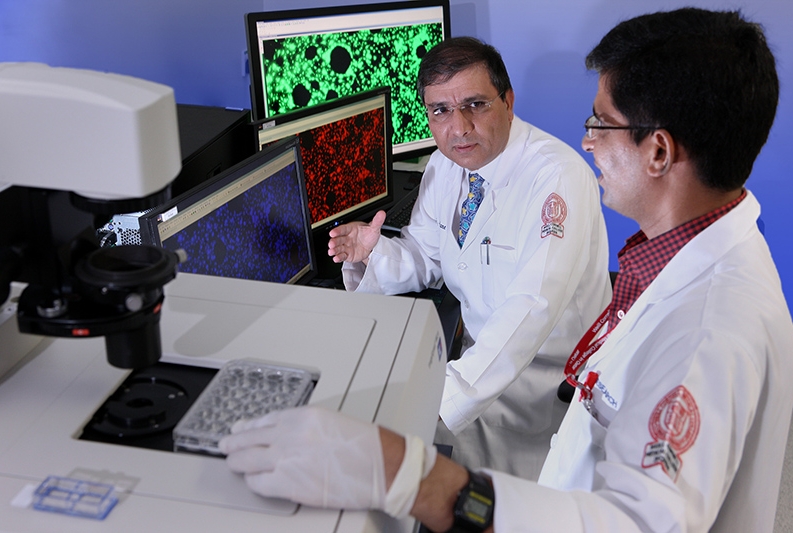
By using glowing proteins, Weill Cornell Medical Center researchers have found the fuel needed to power communication between brain cells is generated as needed -- not continuously, as believed.
Mothers remain at risk of developing a serious blood clot for 12 weeks after giving birth, rather than six weeks as previously thought, say a team of researchers in a study published in the New England Journal of Medicine.
Weill Cornell Medical College has named its department of medicine the Joan and Sanford I. Weill Department of Medicine in honor of the couple's longstanding dedication to the medical college.
The new Belfer Research Building, through its novel architectural design and the art that hangs on its walls, is not only conducive to high-impact research, but is also warm, inviting and engaging.
Dr. Carol Storey-Johnson is named one of the nation's 15 most influential African-American educators and other awards, honors, prizes and achievements for the week of Jan. 31 - Feb. 7.
Newly discovered link between COPD-associated genes and lung function may explain disease's development and disparate respiratory effects of cigarettes on users.
Weill Cornell Medical College opens the Belfer Research Building, a state-of-the-art facility that ushers in a new era at the institution for cutting-edge, translational science.
Weill Cornell investigators have identified an important new pathway responsible for the development of cancer and its spread, which could help prevent metastasis.
With the help of the National Football League, Weill Cornell investigators are using nuclear medicine and advanced MRI techniques to better diagnose concussions.
Scientists at Weill Cornell Medical College in Qatar have discovered how a diabetes drug that has been widely prescribed for more than 50 years protects patients' circulatory systems from damage caused by high blood sugar.
In a novel approach to stroke research, investigators from NewYork-Presbyterian/Columbia University Medical Center and NewYork-Presbyterian/Weill Cornell Medical Center will collaborate to create the New York Stroke Trials Network of Columbia and Cornell. The network is one of 25 regional stroke centers across the country funded by the National Institutes of Health Stroke Trials Network (NIH StrokeNet), announced by the National Institutes of Health in December 2013.